

January 23, 2026
4 minute read

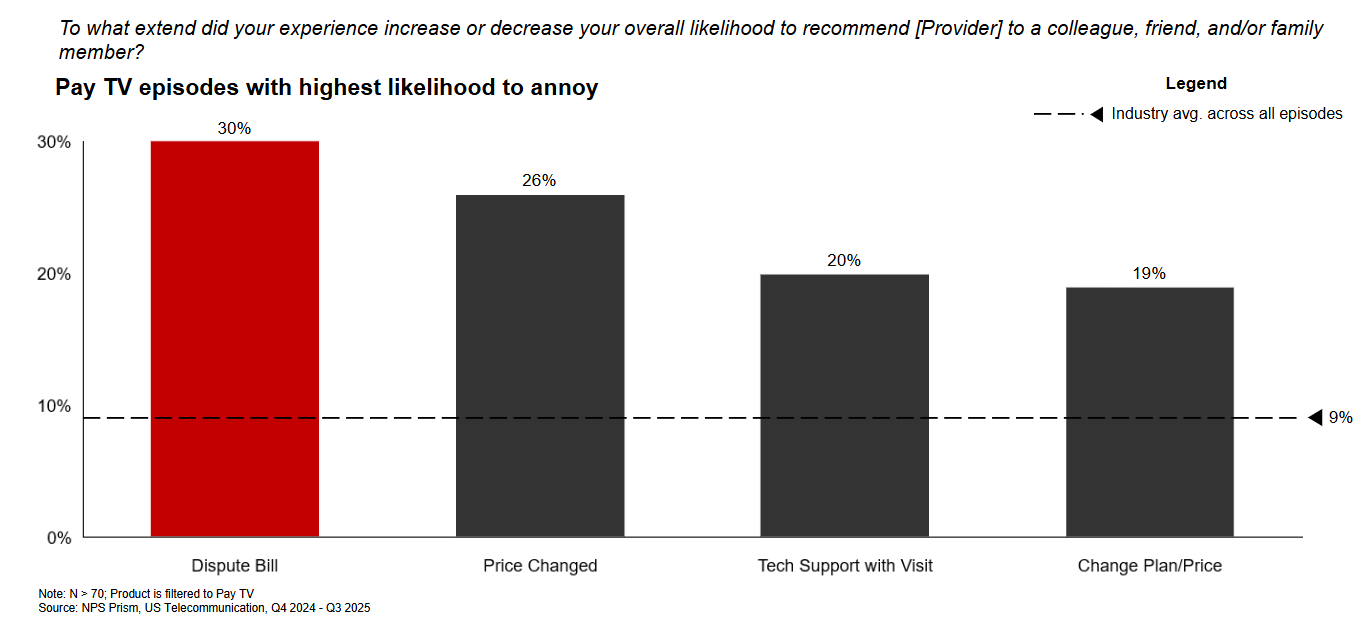
For Pay TV providers in the US, bill disputes top the list of journeys that often annoy consumers, ultimately impacting that customer’s Net Promoter Score (NPS).
Across all customer episodes, this interaction has the highest “likelihood to annoy”, with 30% of customers across all brands indicating that their experience of the episode made them less likely to recommend their Pay TV provider.
The Detractor-creating nature of this episode is powerful, with many customers entering into the interaction with their trust already shaken, citing an overcharge for services, not recognizing a charge on the bill, or being charged for services the customer didn’t use as the reason they reached out in the first place.
So how can Pay TV providers preserve customer trust and avoid creating brand Detractors during this high-stakes interaction? NPS Prism data sheds light on what matters most to customers during bill disputes and which measures most effectively help protect NPS.
Satisfying resolutions, thorough communication, and fast service are critical to customers
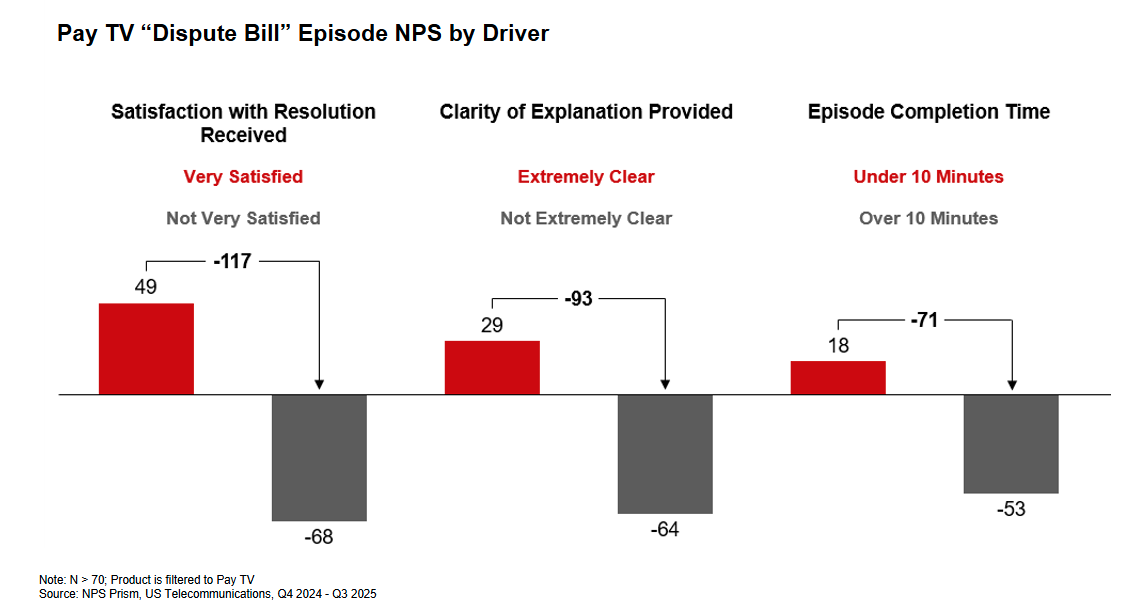
Satisfaction with the resolution offered for their bill dispute is the most critical driver of whether a customer leaves the experience as a brand Promoter or Detractor. Providers incur a penalty of over 100 points in Episode (interaction-level) NPS when customers were “not very satisfied” with the resolution of their bill dispute, compared to when they report being “very satisfied” with how the situation was resolved.
CX factors like clear communication and efficient processes also play an important role in shaping sentiment. When disputes can be resolved in under 10 minutes and customers feel they receive a clear explanation of what caused the discrepancy, providers experience an Episode NPS uplift of 71 and 93 points, respectively.
While the resolution offered may be their primary concern, CX professionals must also take steps to ensure customers understand the cause of the issue and are able to get the situation resolved quickly.
Compensation is a smaller, more nuanced part of the picture
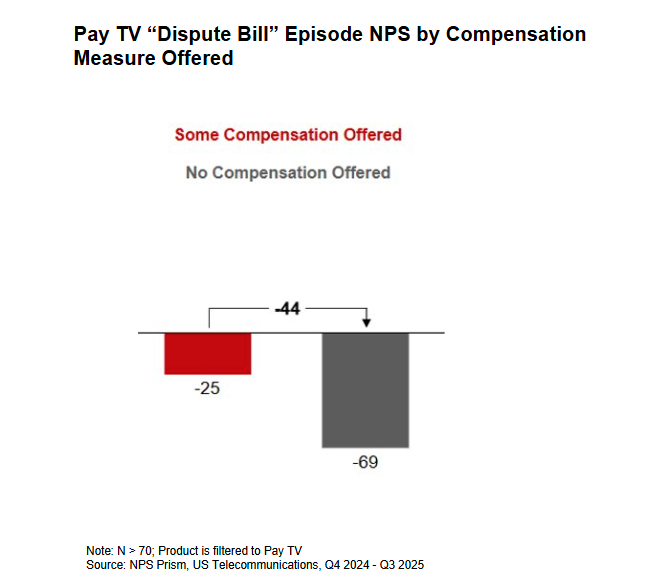
While a cash refund might seem like the easiest way to appease a customer, Prism data shows that overall satisfaction with the resolution offered, and a clear, efficient resolution process, are more critical to protecting Episode NPS than the promise of compensation.
Compared to Episode NPS boosts associated with key drivers like resolution satisfaction, clear explanations, and fast episode completion time, the uplift that providers receive from offering compensation in response to a bill dispute is much smaller, suggesting it has less impact on customer sentiment.
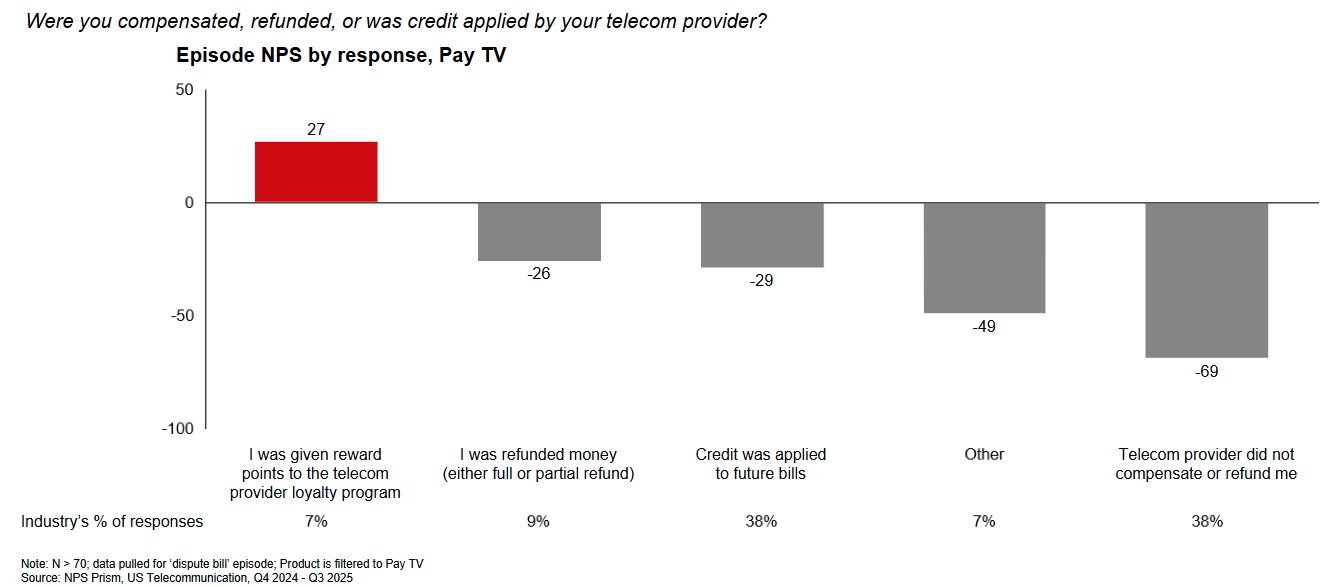
Compensation also doesn’t have to take the form of cash refunds or account credits to satisfy customers. When asked how they were compensated by their provider, customers who received loyalty reward points deliver the highest Episode NPS, outperforming refunds and bill credits by a wide margin. These findings suggest that sentiment can still be protected even when direct refunds can’t be offered to the customer.
While steps should be taken to ensure the detractor-creating experience of a bill dispute can be avoided altogether, there are still strategies that can help protect customer sentiment when one does arrive. By prioritizing clear, transparent communication, fast resolution of disputes, and more effective compensation strategies, CX leaders can use these moments to strengthen brand advocacy.
How do your CX strategies hold up in high-stakes customer journeys?
Request a personalized discovery session to explore our platform and gain never-before-seen NPS insights based on thousands of Pay TV customers, with competitive analyses curated to help you understand which interactions build customer trust and loyalty.
