

December 9, 2025
5 minute read
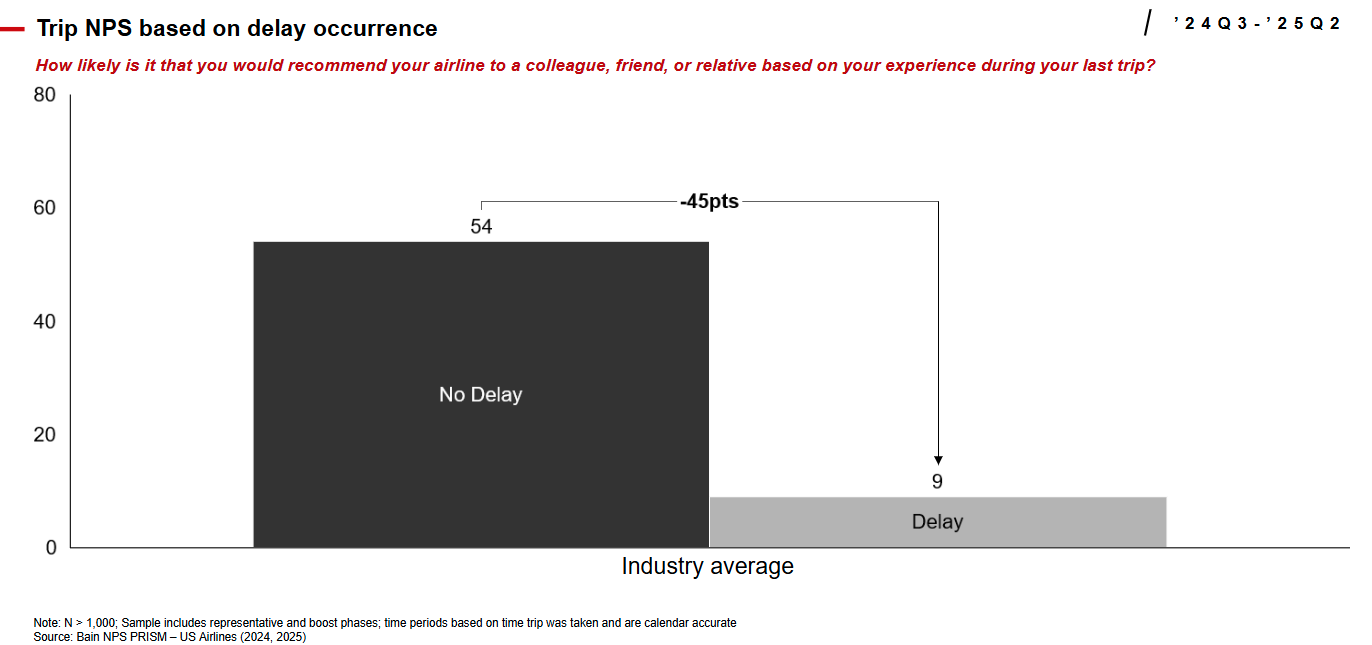
Flight delays can greatly impact brand sentiment for U.S. airlines. On average, customers who experience a delay report a Net Promoter Score for their trip that is 45 points lower than those who are on time, according to NPS Prism data from Q3 2024 – Q2 2025.
One airline stands out. Alaska Airlines, the customer experience leader in service recovery during flight delays, reports an episode-level NPS 30 points higher than the industry average when customers face disruptions. Alaska is also an industry leader in relationship NPS, showing that effective service recovery can reduce the negative effects of disruptions on customer perception and loyalty.
While delays carry a heavy cost for most airlines, Alaska shows that their impact can be reduced when key aspects of the recovery experience are strengthened. By outperforming peers in how they support customers during disruptions, airlines can protect brand perception and preserve customers’ likelihood to recommend.
Timely communication protects NPS performance during delays, even if issues can’t be resolved quickly
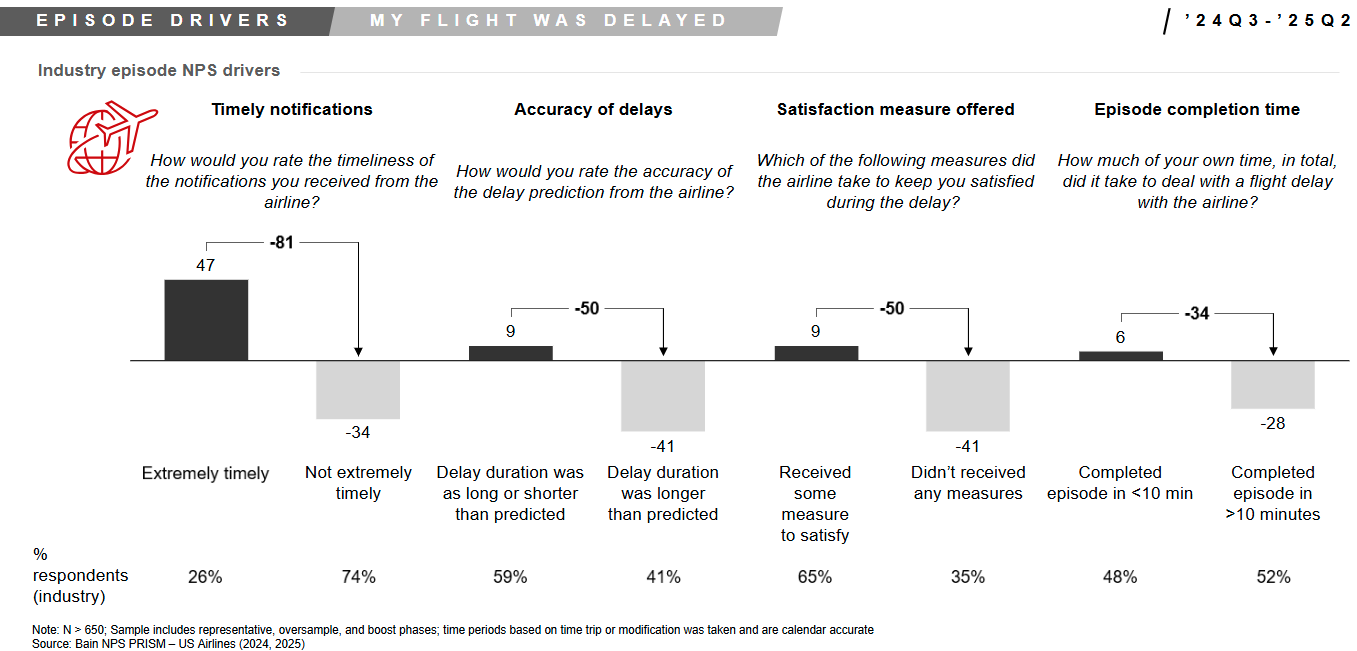
When delays happen, how airlines respond makes the difference. Among the factors that shape customer sentiment, the timeliness of delay notifications emerges as the most powerful driver of NPS recovery. Customers place greater weight on receiving prompt updates than on the accuracy of delay duration predictions or the amount of time required to resolve the disruption.
Airlines experience an 81-point NPS penalty when delay notifications are not considered extremely timely, compared to a 50-point penalty when the delay duration was longer than predicted, and an even lower penalty of 34 points when it took customers more than 10 minutes to deal with a flight delay. However, only 26% of industry respondents believed their airline delivered extremely timely updates, presenting a promising opportunity for airlines to differentiate vs. peers.
Customers still look for human support during delays, but most find either channel to be lacking
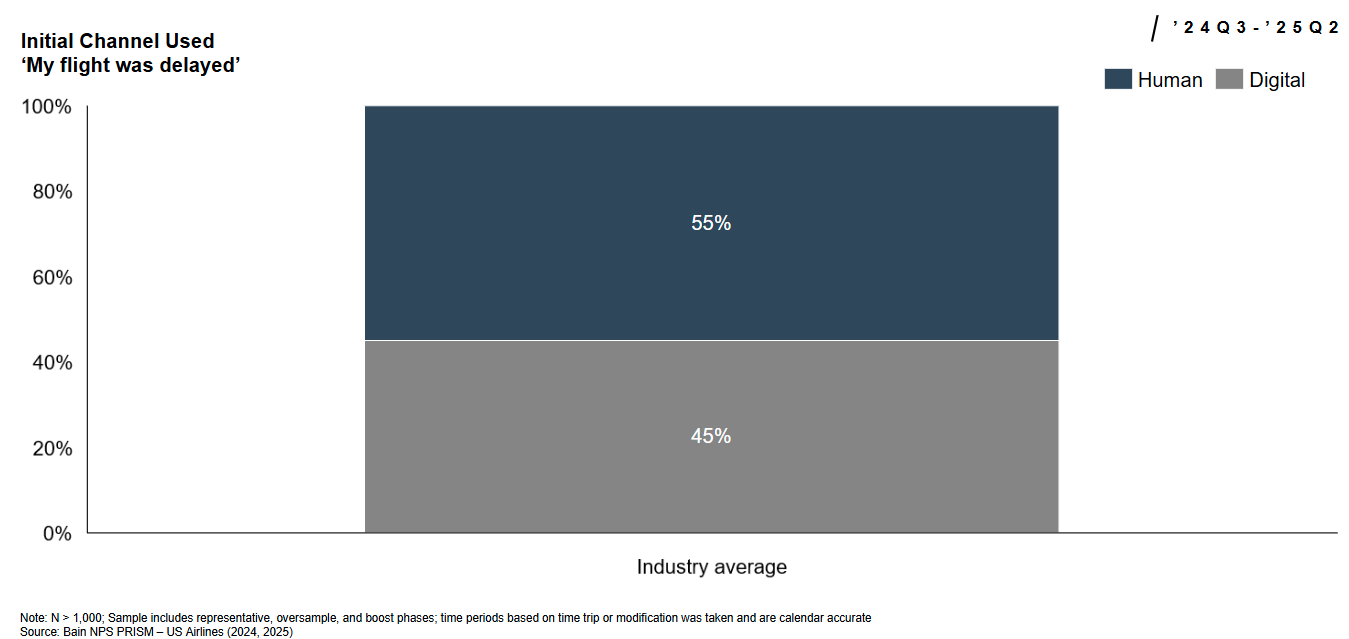
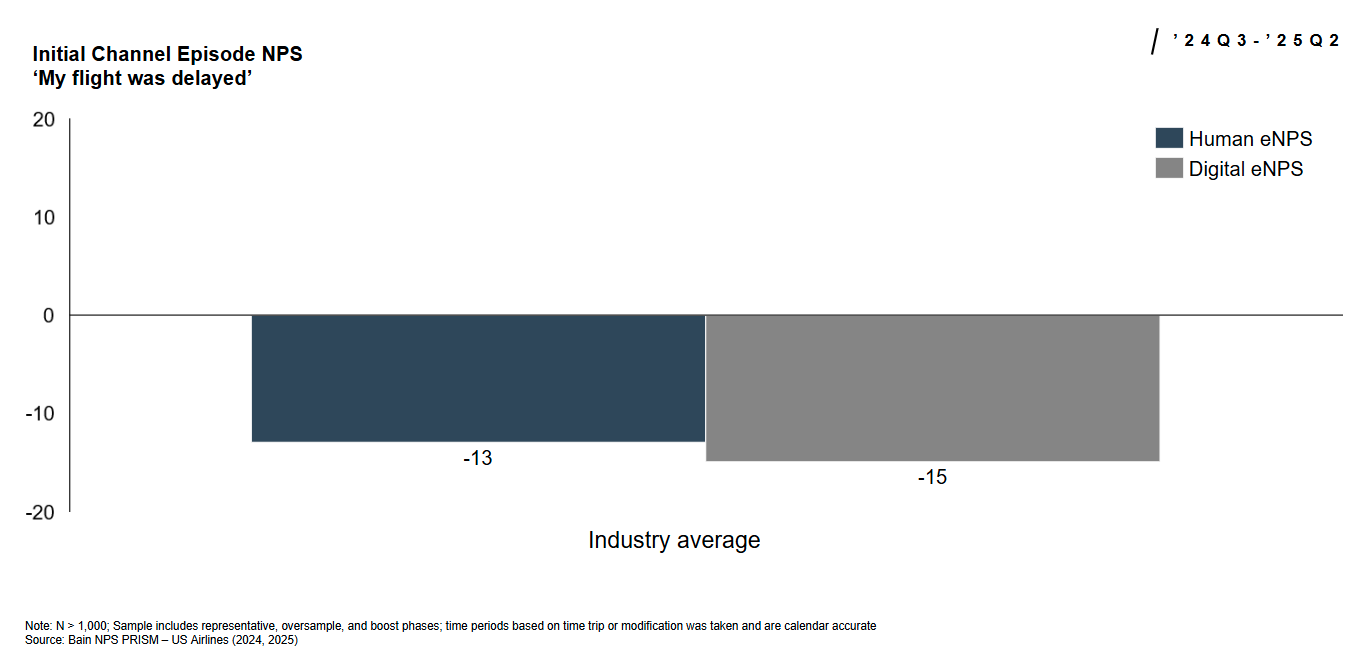
NPS Prism data demonstrates that airline customers are still slightly more likely to use human channels to navigate a flight delay, with 55% of respondents beginning the “flight delay” customer journey with a human rather than through a digital channel. However, both channels, on average, produce negative journey NPS, suggesting that most airlines are still looking to crack the code on how best to help delayed travelers who reach out for assistance.
Strikingly, Alaska Airlines outperforms the industry average episode NPS for human channels by 32 points when delays occur, driven by strong staff performance across all people dimensions, such as representatives’ empathy and knowledge.
As customers may turn more to digital channels in the future, improving digital recovery experiences will be an important lever. But today, Alaska’s performance shows that staff execution in human channels remains critical to mitigating the impact of delays and preserving customer advocacy.
How does your CX during flight delays stack up?
NPS Prism provides the most comprehensive CX data for airlines. Schedule a personalized demo with our team to benchmark your performance against competitors at the product, service and channel level.
